 Turkey (Türkçe)

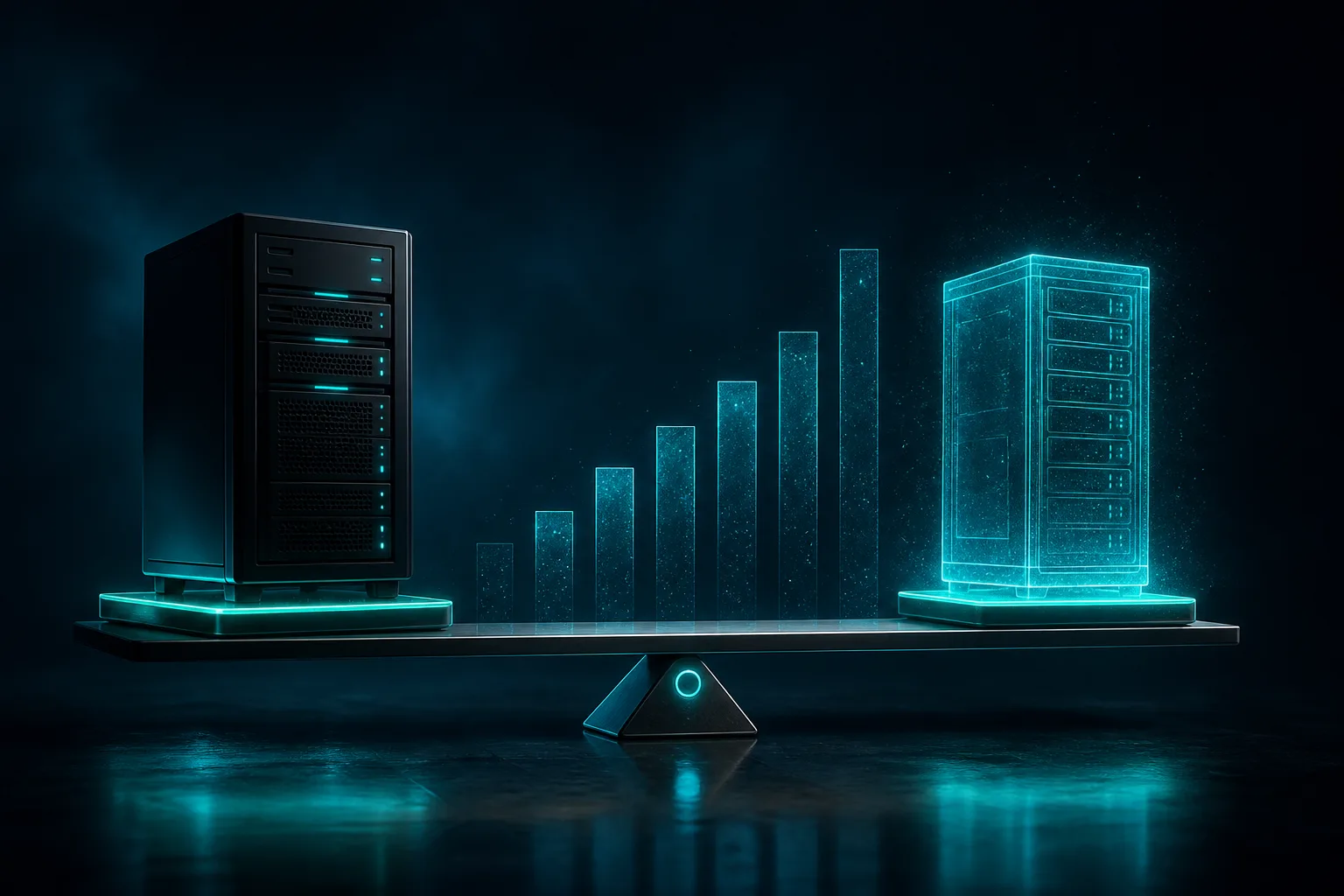
"Wouldn't it be cheaper if we bought the server?" This question gets asked in almost every growing infrastructure team, and the answer is not as clear as it seems. Buying the hardware and placing it in a data center (colocation) saves half over three years in some scenarios; in others it turns out more expensive than renting. The deciding factor is the class of server. In this article we compare the two models over a 36-month total cost of ownership (TCO), with real prices.
For the comparison to be meaningful, it needs to be clear which item belongs to whom.
| Item | Colocation | Dedicated rental |
|---|---|---|
| Hardware | One-off investment (CAPEX), you own it | None — belongs to the provider |
| Monthly expense | Rack + power + network | A single rental item (all inclusive) |
| Failure risk | Yours — you supply the spare part | With the provider |
| Upgrades | You buy and fit the part; full control | Plan change, usually the same day |
| Accounting | Depreciation + expense | Entirely a direct expense |
| Exit | The hardware stays with you (second-hand value) | The contract ends, no obligations remain |
A Ryzen 9 9950X-class system. The rental equivalent is 15,000₺/mo; on the colocation side, a 1U shared rack is 4,500₺/mo. The hardware investment is taken as 150,000₺ as an example.
| Starter | Monthly | 12 months | 36 months | |
|---|---|---|---|---|
| Dedicated rental | 0 ₺ | 15,000 ₺ | 180,000 ₺ | 540,000 ₺ |
| Colocation (1U) | 150,000 ₺ | 4,500 ₺ | 204,000 ₺ | 312,000 ₺ |
| Difference | — | 10,500 ₺ in favour | 24,000 ₺ against | 228,000 ₺ in favour |
At a saving of 10,500₺ a month, the 150,000₺ investment is paid back in about 14.3 months of operation. In the twelfth month colocation is still behind; from the fifteenth month it pulls ahead and by the end of 36 months it saves 42%. On top of that, because the hardware stays with you, there is a second-hand value we have not included in the calculation.
Let us do the same calculation with a Ryzen 5-class system. The rental price starts from 2,900₺/mo. The base price of the colocation plan, however, is 4,500₺/mo.
A general threshold follows from this: if the monthly rent is not clearly above the colocation fee, the maths of colocation does not work. In practice, around 8,000₺/mo is a reasonable break point; renting should be considered for plans below it and buying for those above. You can check dedicated plan prices on the dedicated server page at any time.
As scale grows, the gap widens in favour of colocation, because the rack cost is divided by the number of servers. Five high-end servers in a 10U rack:
For the details of the power calculation and different power levels, see the rack rental prices guide for more. We diagrammed how five servers fit into a rack in the U calculation guide article.
The calculations above show direct cash flow. When deciding, the following items also need to be weighed:
We covered the general framework of cost modelling in the server cost and TCO guide article.
| Your situation | Recommendation |
|---|---|
| The project is shorter than 12 months or the load is uncertain | Rental — you cannot reach the break-even point |
| Monthly rent is below 8,000₺ | Rental |
| You already have hardware in hand | Colocation — the investment is sunk, the monthly expense falls |
| A production system with a steady load that will run for 3+ years | Colocation |
| Custom hardware is needed (special GPU, multi-disk chassis) | Colocation — a configuration outside the catalogue |
| Cash flow is tight, CAPEX is difficult | Rental — all of it is expensed |
| 5+ servers, continuously growing infrastructure | Rack rental + your own hardware |
| Traffic fluctuates, with seasonal peaks | Hybrid: base load on colocation, rental for peaks |
The hybrid model in the last row gives the most efficient result in practice: you run the predictable base load on your own hardware and cover seasonal increases with monthly dedicated servers.
How many months is the break-even point for colocation?
On high-end hardware it is typically between 12–18 months. The formula: hardware cost ÷ (monthly rent − monthly colocation fee).
Can I rent the hardware and put it in the data center?
In that case you are already on the dedicated rental model; you do not need to pay a separate colocation fee.
Which is more advantageous for tax purposes?
The whole rental fee is a period expense. Purchased hardware is subject to depreciation. The cash flow and balance sheet effects differ; we recommend evaluating this with your accountant.
How long does it take to move my existing server?
Setup and migration support from your old data center are free; the typical commissioning time is 24 hours.
What if I change my mind later?
Contracts are flexible from a 1-month trial period up to 36 months, with no early termination penalty. The hardware also stays with you.
If you have hardware, colocate it; if not, rent — both in the Istanbul data center, built to Tier 3 standards
Server Colocation Dedicated Servers