 Turkey (Türkçe)
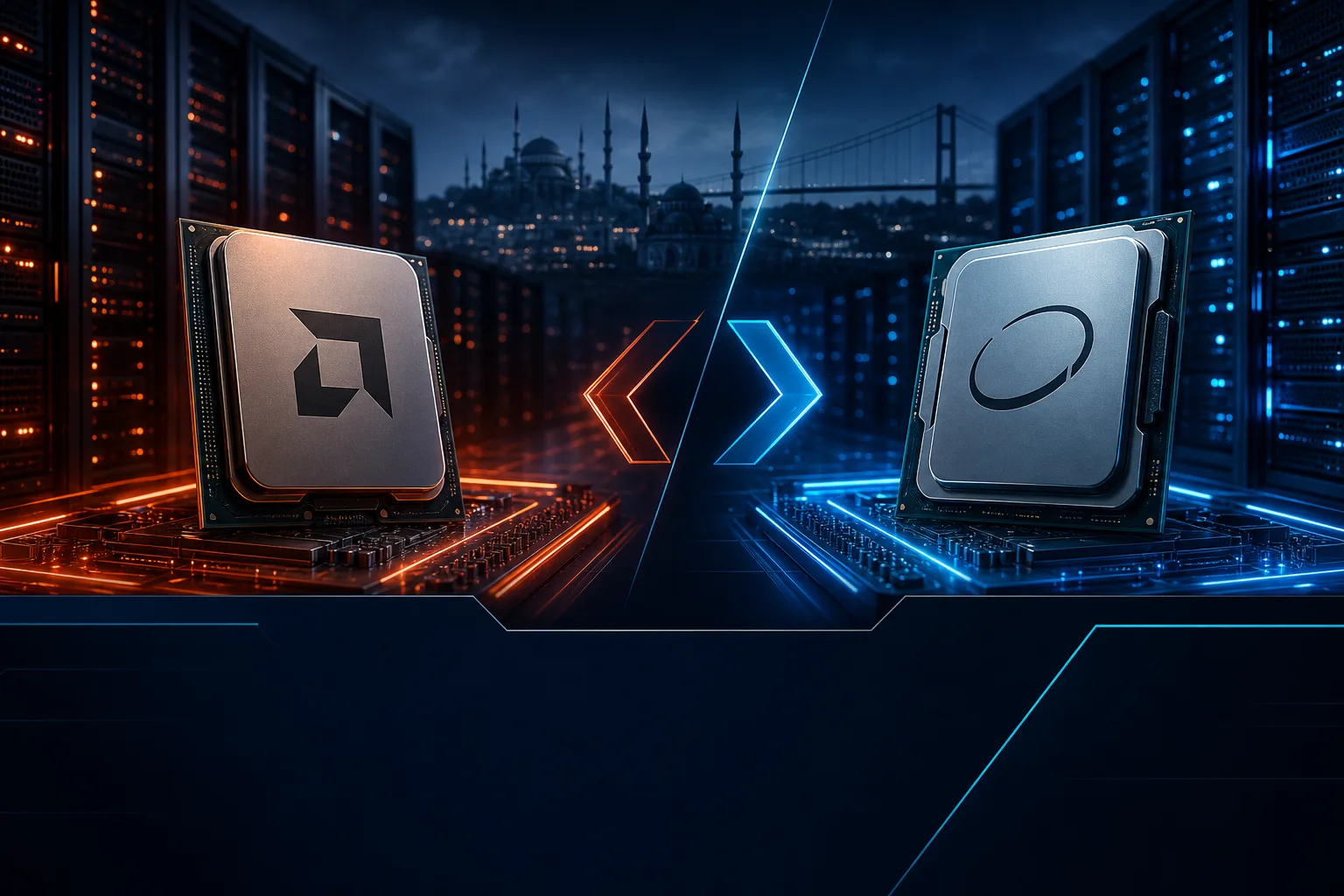
Ryzen vs Xeon is a question that, for dedicated servers, should not be asked as “which logo is more enterprise?”. The question is: does this workload want high boost and 16 cores, or more cores, ECC by default and a server platform? This article focuses on the dedicated / bare metal rental decision. The older comparison focused on gaming + VDS is still available: Ryzen or Xeon? (gaming and VDS). For Xeon plans, see the Turkey Xeon dedicated guide.
We are not making up numbers: there is no Cinebench or SPECint here. The decision comes from architectural differences.
| Dimension | AMD Ryzen dedicated | Intel Xeon dedicated |
|---|---|---|
| Clock / single thread | High boost (9950X official ceiling 5.7 GHz) | More conservative boost on most SKUs, more core-count options |
| Core ceiling | 8 or 16 on this line (5700G / 5950X / 9950X) | Rental Xeons can go above 16 depending on the SKU |
| ECC | Supported by the chip; DIMMs/motherboard required. A separate ECC plan at SistemDC | Usually the platform default |
| Socket | Single AM5 | Single or (in some series) multi-socket |
| Typical workload | Gaming, CI, CPU encoding | VM hosts, wide I/O, memory integrity as a priority |
The 9950X's core/clock breakdown: Ryzen 9 9950X server specifications. Ryzen nodes for rent are in the Ryzen physical server category.
The general “what is it, how do I choose” checklist: AMD Ryzen dedicated server selection guide.
Which is better, a Ryzen dedicated server or a Xeon?
It depends on the workload. Ryzen for high boost and 16C gaming/CI/encoding; Xeon for many VMs, ECC by default and platform breadth.
Which gives more cores at the same price?
It varies by SKU. SistemDC's Ryzen line has 8 or 16 cores. Read the Xeon core count from the current SKU in that category; we are not writing a fixed “always N cores” in this article.
Is there no ECC on Ryzen?
The 9950X supports ECC. It needs ECC memory and a suitable motherboard to work. SistemDC sells this as a separate business plan.
Can I try a VDS first?
Yes. Starting with a VDS from the same Zen 5 host and moving to dedicated when you hit the ceiling is a common path. The gaming/VDS details are in the older Ryzen or Xeon article.